
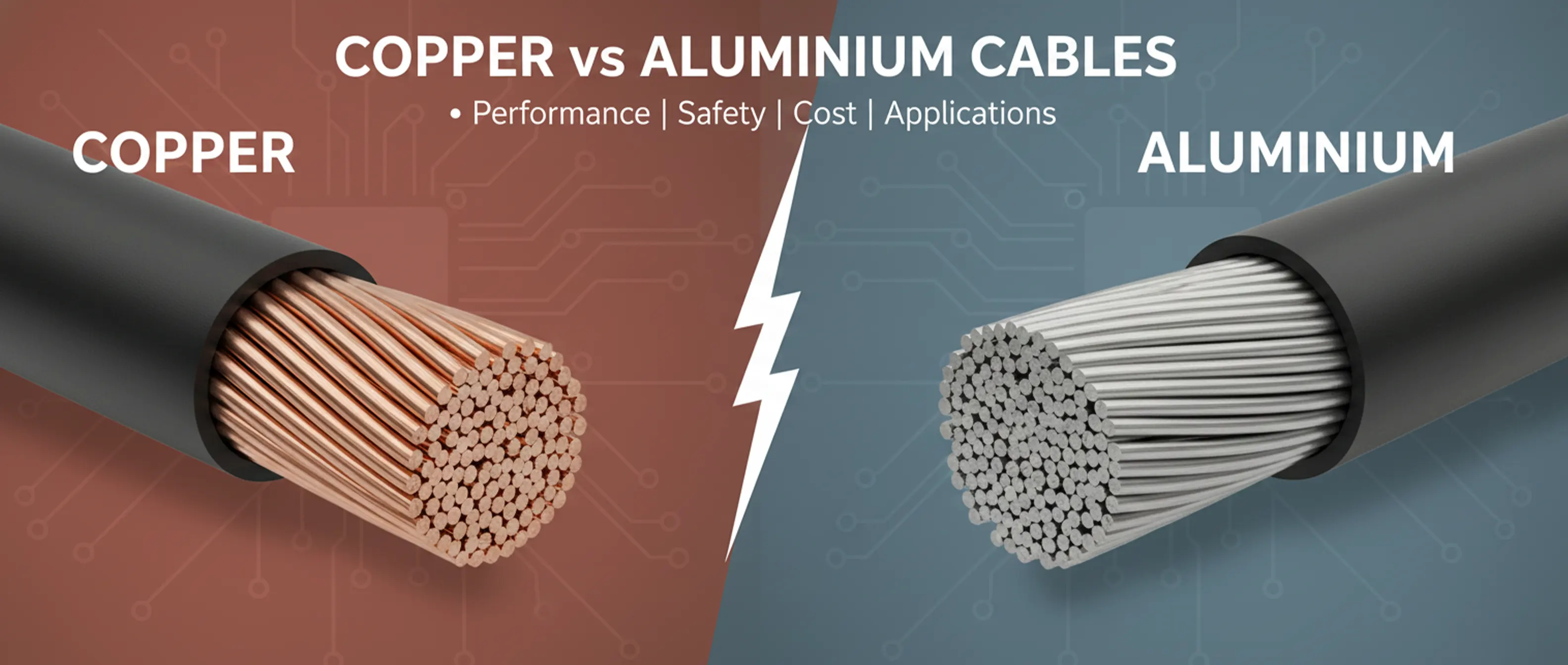
Copper vs Aluminium Cables: Which Is Better for Wiring?
Choosing the right cable is one of the most important decisions in any electrical installation. The two most commonly used conductor materials are copper and aluminium. Each has its own advantages, limitations, and ideal applications. Whether you are wiring a home, commercial building, or industrial facility, understanding the differences between copper and aluminium cables will help you make a safer and more cost-effective choice.
In this guide, we compare copper vs aluminium cables based on performance, safety, cost, and real-world usage to help you decide which is better for wiring.
What Are Copper and Aluminium Cables?
Electrical cables consist of a conductor that carries current, insulation, and protective sheathing. The conductor is usually made of either copper or aluminium.
Copper cables are known for high conductivity, durability, and reliability.
Aluminium cables are lighter, more affordable, and widely used in large-scale power distribution.
Both materials are approved for electrical use when installed correctly and according to standards.
Electrical Conductivity and Performance
One of the biggest differences between copper and aluminium is electrical conductivity.
Copper has higher conductivity, meaning it carries more current with less resistance.
Aluminium has about 60% of the conductivity of copper, so it requires a larger cross-sectional area to carry the same current.
What This Means in Practice
Copper cables can be thinner for the same load.
Aluminium cables must be thicker to avoid overheating.
For installations where space is limited—such as residential wiring—copper is often preferred.
Strength, Flexibility, and Durability
Copper Cables
Stronger and more flexible
Less likely to break during bending or installation
Better resistance to wear and mechanical stress
Aluminium Cables
Lighter but mechanically weaker
More prone to damage if bent repeatedly
Requires careful handling and proper support
Because of its strength and flexibility, copper is generally easier and safer to work with, especially in internal wiring.
Safety and Fire Risk
Safety is a major concern in electrical wiring.
Copper
Lower resistance reduces heat buildup
More stable connections over time
Less risk of loose terminals and overheating
Aluminium
Higher resistance leads to more heat
Expands and contracts more with temperature changes
Requires special connectors and installation techniques
Improperly installed aluminium cables can increase the risk of overheating and fire. However, when installed correctly with approved accessories, aluminium can be safe for certain applications.
Corrosion and Oxidation
Copper oxidizes slowly and remains conductive
Aluminium oxidizes faster, forming a non-conductive oxide layer
This oxide layer can increase resistance at connection points if not treated properly. That’s why aluminium wiring requires anti-oxidation compounds and compatible terminals.
Cost Comparison
Cost is often the deciding factor in large projects.
Copper cables are more expensive due to higher material costs.
Aluminium cables are significantly cheaper and lighter, reducing both material and transportation costs.
For large-scale power distribution, aluminium offers substantial savings without compromising performance when designed correctly.
Weight and Installation
Aluminium is about 30% lighter than copper.
Lighter cables are easier to transport and install over long distances.
This makes aluminium a preferred choice for:
Overhead power lines
Long cable runs
Utility and industrial power distribution
For small indoor installations, weight is less important, making copper the more practical option.
Typical Applications
Where Copper Is Better
Residential wiring
Commercial buildings
Control panels
High-end electrical installations
Areas requiring compact wiring
Where Aluminium Is Better
Industrial power distribution
Utility connections
Overhead transmission lines
Large cross-section power cables
Choosing the right material depends on the application rather than just price.
Standards and Compliance
Both copper and aluminium cables must comply with recognized standards such as:
IEC
IS
BS
Using certified cables and following manufacturer installation guidelines is essential for safety and performance, regardless of conductor material.
Copper vs Aluminium: Quick Comparison
| Feature | Copper | Aluminium |
|---|---|---|
| Conductivity | High | Medium |
| Cable Size | Smaller | Larger |
| Strength | Strong & flexible | Weaker |
| Cost | Higher | Lower |
| Weight | Heavier | Lighter |
| Safety | Very high | High (if installed properly) |
Which Is Better for Wiring?
For homes and commercial buildings, copper is generally the better choice due to safety, reliability, and compact size.
For industrial and utility applications, aluminium is often preferred for its cost efficiency and lighter weight, especially for high-current and long-distance installations.
There is no universal “best” option—only the right option for the right application.
Conclusion
Copper and aluminium cables both play vital roles in modern electrical systems. Copper offers superior conductivity, durability, and safety, making it ideal for residential and commercial wiring. Aluminium provides a cost-effective and lightweight solution for large-scale and industrial power distribution.
By understanding the differences and selecting cables based on application, load, and safety standards, you can ensure a reliable and efficient electrical installation.
